Breast Reconstruction Surgery in Abu Dhabi — Post-Mastectomy & Restorative Care

Post-mastectomy breast reconstruction at SKMC, Abu Dhabi. DIEP flaps, implants, lipofilling by Dr Thomas Colson, Board-Certified Plastic Surgeon. Learn more.

Prophylactic Breast Reconstruction (Mini-invasive & Robotic)

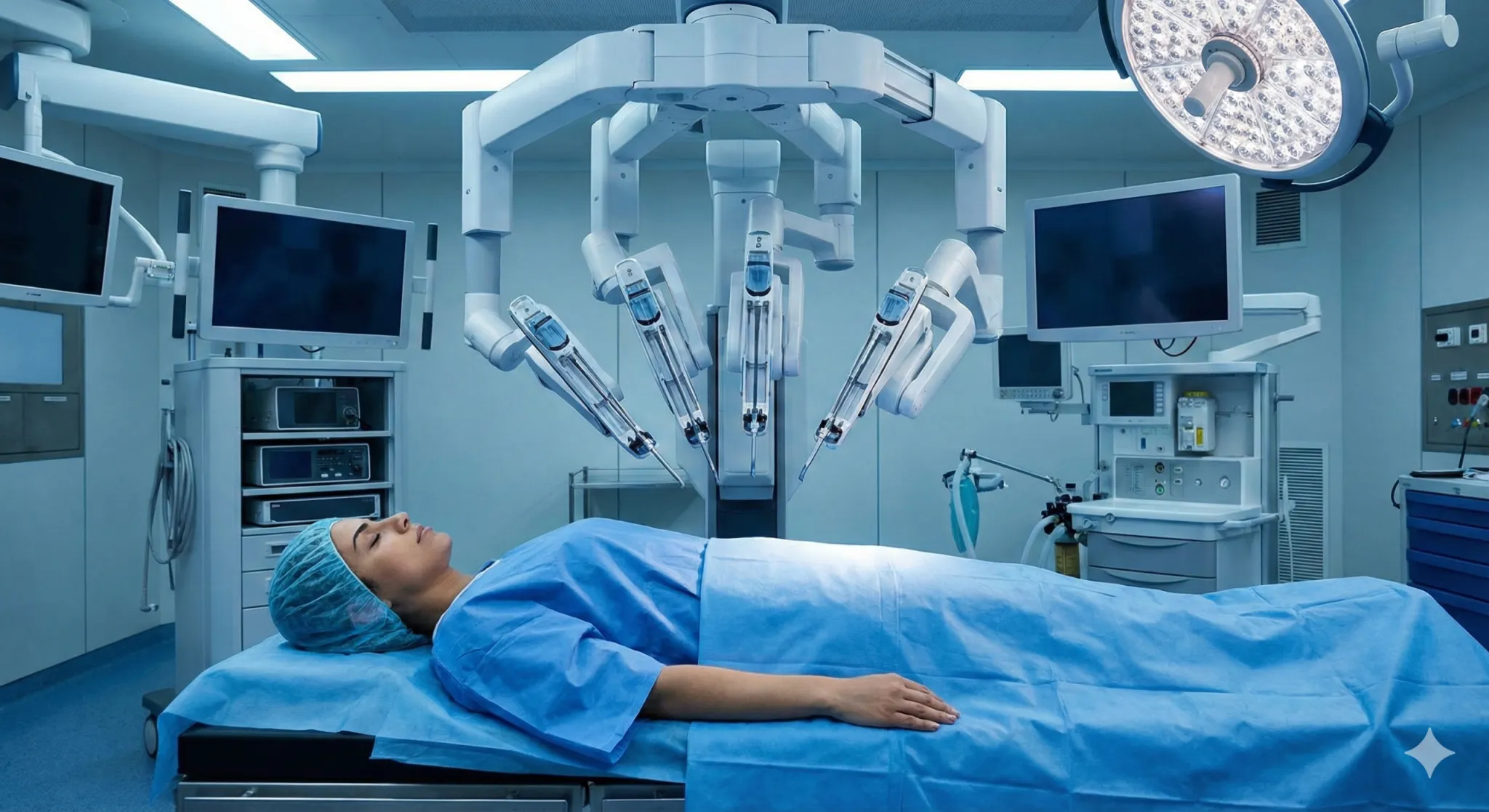
Advanced Prophylactic Reconstruction: The Robotic Advantage

For women with a high genetic risk of breast cancer (such as BRCA1 or BRCA2 gene carriers), the decision to undergo preventative surgery is courageous. Dr. Thomas Colson honors this decision by offering the most advanced, minimally invasive surgical options available in the UAE: Robotic and Endoscopic Nipple-Sparing Mastectomy.

This state-of-the-art approach moves beyond traditional surgery, aiming not just to remove risk but to preserve the natural beauty, sensation, and integrity of the breast.

1. Robotic Precision: Redefining the Mastectomy

Traditional mastectomies often require large incisions in the breast. However, utilizing advanced Robotic Surgical Systems or Endoscopic assistance, Dr. Colson can perform the entire glandular removal through a single, discreet incision hidden in the axilla (armpit).

Why choose Robotic/Endoscopic Mastectomy?

  • Hidden Scars: By placing the incision in the underarm, the breast itself remains scar-free.
  • Maximum Preservation: The robotic arms provide 3D visualization and unmatched dexterity. This allows Dr. Colson to separate the glandular tissue from the skin with extreme precision, preserving the Skin Envelope and the Nipple-Areola Complex.
  • Nerve Protection: The high magnification allows for better identification and preservation of sensory nerves, improving the chances of retaining breast sensation.

2. Immediate Reconstruction ("One-Step" Surgery)

We believe that waking up with a restored silhouette is vital for your psychological well-being. Dr. Colson performs Immediate Breast Reconstruction in the same operative setting.

Once the glandular tissue is removed via the small incision, an implant or tissue expander is inserted through the exact same opening.

  • The Result: You enter surgery to remove risk and wake up with reconstructed breasts, minimizing the feeling of “loss” often associated with mastectomy.

3. Who is the Ideal Candidate?

This technique is specifically designed for:

  • Prophylactic Patients: Women with genetic mutations (BRCA) who do not have active cancer.
  • Small to Medium Breasts: Patients with moderate breast volume and minimal ptosis (drooping) are the best candidates for nipple-sparing approaches.

Frequently Asked Questions

The main difference is the incision and visibility. Traditional surgery requires a long incision on the breast. Robotic surgery uses a small incision in the armpit, using a camera and robotic arms to work “internally.” This results in less pain, faster recovery, and no visible scars on the breast.

Yes. Studies have shown that robotic nipple-sparing mastectomy is as effective as open surgery in removing breast tissue for risk reduction, with the added benefit of lower complications related to skin necrosis (tissue death) due to the gentle handling of tissues.

While some sensation loss is a risk with any mastectomy, the robotic approach offers the best chance of preserving sensation. The magnified view allows the surgeon to identify and spare the neurovascular bundles that supply the nipple.

Microsurgical and autologous Breast Reconstruction

Autologous Reconstruction: Your Body’s Natural Solution

For patients seeking the most natural look and feel, Autologous Reconstruction (using your own tissue) is the premier choice. Unlike implants, autologous tissue is warm, soft, and evolves with your body—gaining or losing volume naturally as your weight fluctuates.

Dr. Thomas Colson is one of the few surgeons in Abu Dhabi with the specialized microsurgical training required to perform these advanced procedures, specifically the DIEP Flap and the Latissimus Dorsi Flap.

1. The Gold Standard: DIEP Flap Reconstruction

The Deep Inferior Epigastric Perforator (DIEP) flap represents the pinnacle of modern breast reconstruction. It uses skin and fat from the lower abdomen to create a new breast mound.

Why is the DIEP Flap Superior?

  • Muscle-Sparing: Unlike the older TRAM flap, the DIEP technique carefully separates blood vessels from the muscle without cutting or removing the abdominal muscle itself. This preserves your core strength and significantly reduces the risk of hernias.
  • Dual Benefit: Because tissue is taken from the lower belly, the donor site is closed in a way that mimics an abdominoplasty (tummy tuck), resulting in a flatter abdomen.
  • Natural Aging: The reconstructed breast feels like natural tissue because it is natural tissue. It will not ripple or harden like an implant might over time.

Dr. Colson’s Note: “The DIEP flap is technically demanding but offers the best long-term quality of life. You wake up with a new breast and a flatter tummy, without sacrificing your abdominal muscle strength.”

2. The Reliable Alternative: Latissimus Dorsi Flap

The Latissimus Dorsi (LD) flap uses muscle, skin, and fat from the upper back to reconstruct the breast. This is a highly reliable option often used when the abdomen is not a suitable donor site (e.g., due to previous tummy tucks or lack of tissue).

How It Works

  • The Procedure: An oval section of skin and the underlying latissimus dorsi muscle are tunneled from the back to the chest to recreate the breast shape.
  • Volume Enhancement: Since back tissue is often thinner than abdominal tissue, Dr. Colson may combine this flap with a small implant or fat grafting (lipofilling) to achieve the desired volume.
  • The Donor Site: The scar is located horizontally on the back, typically hidden beneath the bra line.

Frequently Asked Questions

Ideal candidates generally have enough excess tissue in the lower abdomen to build a breast. Patients who are very thin or have had previous abdominal surgeries (like a tummy tuck) may be better suited for the Latissimus Dorsi flap or implant-based reconstruction.

The Latissimus Dorsi is a large muscle, but the body has other muscles that compensate for its function. Most patients return to full activity, including sports, without significant loss of function, though some may notice mild weakness in specific overhead movements.

 Recovery is longer than implant surgery because there are two surgical sites (the chest and the donor site).

  • Hospital Stay: Typically 3 to 5 days.
  • Return to Work: 4 to 6 weeks.
  • Full Activity: 6 to 8 weeks. 

Implants and Expanders

Staged Implant Reconstruction: A Gradual Path to Perfection

For many women, the safest and most aesthetic route to breast reconstruction is a journey taken in steps. Staged Implant Reconstruction, also known as the Two-Stage Method, is the gold standard for patients where immediate high-volume implant placement is not feasible.
Dr. Thomas Colson utilizes this method to prioritize the health of your skin and the final shape of the breast, particularly for patients with tight chest skin or those undergoing radiation therapy.

When is Staged Reconstruction Recommended?

Dr. Colson typically advises this approach for two main reasons:
  1. Skin Tension: If a mastectomy leaves insufficient skin to cover a full-sized implant immediately, the skin must be gently stretched first.
  2. Radiation Therapy: If post-mastectomy radiation is planned, a temporary expander preserves the breast pocket (space) without risking a permanent implant to radiation damage.

The Process: From Expander to Implant

This reconstruction is performed in two distinct surgical phases, allowing your body to adapt gradually.

Phase 1: Tissue Expander Placement

During your mastectomy (or in a delayed surgery), Dr. Colson places a Tissue Expander—a temporary, balloon-like device—beneath the chest muscle or the skin. At this stage, the breast will appear flat or slightly raised.

Phase 2: The Expansion Period

Once your incisions have healed (typically 2-3 weeks post-surgery), you will visit Dr. Colson’s clinic in Abu Dhabi for gradual expansions.

  • How it works: A small amount of sterile saline solution is injected into the expander through a magnetic port.
  • The sensation: You may feel a feeling of “tightness” or pressure, similar to muscle soreness, but this subsides quickly.
  • The goal: Over several weeks, this process gently stretches the overlying skin and muscle, creating a healthy pocket for the final implant.

Phase 3: The Exchange Surgery

Once the skin has stretched adequately and any necessary treatments (like radiation) are complete, a second, smaller surgery is performed. Dr. Colson removes the temporary expander and replaces it with a permanent, cohesive gel silicone implant.

Dr. Colson’s Insight: “While two surgeries may seem like a longer path, this method often yields the most natural-looking results because it allows us to control the skin envelope and position the final implant with precision.”

Frequently Asked Questions

Most patients describe the sensation as “pressure” or “tightness” rather than acute pain. This feeling typically lasts for a few hours after each saline injection. Dr. Colson ensures the pace of expansion is comfortable for you.

This depends on your treatment plan. If no radiation is required, the exchange surgery can happen a few months after full expansion. If you require radiation, the expander may stay in place for 6 to 12 months to ensure the skin is fully healed before placing the permanent implant.

Yes. Once your surgical incisions are fully healed and Dr. Colson gives clearance, you can shower and swim. The expander is internal and watertight.

Breast Fat Transfer

Breast Fat Transfer: The Finishing Touch to Perfection

In the journey of breast reconstruction, details matter. While implants or flaps provide the volume, Breast Fat Transfer(also known as Lipofilling or Fat Grafting) is the artistic tool used to refine the shape, feel, and quality of the result.
Dr. Thomas Colson utilizes this advanced technique to bridge the gap between a “good” reconstruction and a “natural” one. It serves as both an aesthetic enhancer and a regenerative treatment for damaged tissue. 

The Role of Fat Grafting in Reconstruction

Fat grafting is rarely a standalone method for total reconstruction but is an invaluable refining tool used in three specific scenarios:
  1. Camouflaging Implant Edges (“Step-offs”)

In thin patients, the edges of a breast implant can sometimes be visible or palpable (rippling).

  • The Solution: Dr. Colson injects a layer of your own fat over the implant. This creates a soft, natural cushion that hides the transition between the implant and your chest wall, eliminating the “step-off” effect.
  1. Filling Contour Irregularities

Reconstructive surgery can sometimes leave small dents, hollows, or asymmetry.

  • The Solution: Fat is used like a permanent, natural filler to sculpt the breast, filling in these irregularities to achieve a smooth, rounded contour.
  1. Regenerating Radiated Skin

Radiation therapy often leaves the skin tight, thin, and prone to complications.

  • The Regenerative Benefit: Fat tissue is rich in stem cells. When injected into radiated skin before an implant surgery, it revitalizes the tissue, improves elasticity, and thickens the skin. This significantly lowers the risk of complications during subsequent implant placement.

How the Procedure Works

  1. Harvesting: Fat is gently suctioned via liposuction from a donor area where you have excess (abdomen, thighs, or flanks). This offers the bonus of body contouring in those areas.
  2. Purification: The fat is processed to remove oil and fluids, leaving only pure, healthy fat cells.
  3. Injection: Dr. Colson uses fine cannulas to meticulously inject the fat droplets into the breast tissue at various depths for a smooth integration.

Dr. Colson’s Insight: “Think of the implant as the structure of a house, and fat grafting as the interior design. It provides the softness and warmth that makes the reconstruction feel truly like you.”

Frequently Asked Questions

Yes. While the body typically absorbs about 30% of the transferred fat in the first 3 months, the remaining 70% establishes a blood supply and stays permanently. Dr. Colson may slightly overfill the area initially to account for this absorption.

The scarring is minimal. The incisions for liposuction and injection are tiny (only a few millimeters), often requiring no stitches, and fade to become virtually invisible.

For total breast reconstruction, usually not. Fat grafting is best for adding volumeand refinement rather than building a complete breast mound from scratch (unless the breast is very small). However, “Composite Reconstruction” combines both for the best of both worlds.

Breast reconstruction revision

Revision Breast Reconstruction in Abu Dhabi: Refining Your Result

Breast reconstruction is a journey, not just a single surgery. While the initial procedure rebuilds the breast mound, Revision Breast Reconstruction is often the vital final step to achieve aesthetic perfection, comfort, and emotional closure.

For patients in Abu Dhabi seeking to refine their results, Dr. Thomas Colson brings French board-certified expertise to three specific pillars of revision surgery: Contralateral SymmetrizationFat Grafting (Lipofilling), and Implant Exchange for Capsular Contracture.

1. Achieving Balance: Contralateral Symmetrization

A common concern after unilateral (one-sided) reconstruction is that the new breast looks perkier or shaped differently than the natural breast. To achieve visual harmony, Dr. Colson operates on the healthy, opposite (contralateral) breast.

  • Breast Lift (Mastopexy): If the natural breast has drooped (ptosis), it is lifted to match the position of the reconstructed breast.
  • Breast Reduction: If the natural breast is heavy, it is reduced to match the volume of the reconstruction.
  • Breast Augmentation: A small implant or fat transfer is added to the natural breast to match the fullness of the reconstructed side.

Dr. Colson’s Note: “Symmetry is the key to feeling comfortable in clothing and swimwear. We aim for a result where no one can tell which side was reconstructed.”

2. The Finishing Touch: Fat Grafting (Lipofilling)

Fat grafting is a powerful tool for Generative Tissue Engineering. It involves harvesting fat from areas like the abdomen or thighs and injecting it into the reconstructed breast.

Why choose Fat Grafting?

  • Softens the result: It places a layer of natural tissue over an implant, hiding ripples or edges.
  • Corrects contour deformities: It fills small divots or hollows left by the initial surgery.
  • Improves skin quality: Stem cells in the fat can improve the quality of radiated skin.

3. Treating Capsular Contracture: Implant Exchange

Capsular contracture is the hardening of the scar tissue around a breast implant. It can cause the breast to feel firm, look distorted, or become painful.

Dr. Thomas Colson specializes in Total Capsulectomy and Implant Exchange:

  1. Removal: The hardened capsule and the old implant are carefully removed.
  2. Exchange: A new, high-quality implant is inserted.
  3. Prevention: Dr. Colson may utilize an Acellular Dermal Matrix (ADM) or fat grafting to reduce the risk of recurrence.

Frequently Asked Questions

Most surgeons, including Dr. Colson, recommend waiting at least 3 to 6 months after your initial reconstruction or radiation therapy. This allows swelling to subside and tissues to settle, ensuring the revision addresses the permanent shape of the breast.

In many cases, yes. If the surgery is part of a breast cancer reconstruction journey, health insurance providers in Abu Dhabi often cover the symmetrization of the opposite breast to ensure a normal quality of life. We advise checking with our clinic coordinator for specific policy details.

Yes. While the body may absorb a small percentage (20-30%) of the transferred fat in the first few months, the remaining fat cells establish a blood supply and remain permanently in the breast.