Facial Reconstruction Surgery in Abu Dhabi — Trauma, Tumor & Congenital Care

Facial reconstructive surgery at SKMC, Abu Dhabi. Trauma, tumor, and congenital cases by Dr Thomas Colson, Board-Certified Plastic Surgeon. Learn more.

Facial Reconstruction: Restoring Form and Dignity

Facial Trauma

Facial Trauma Reconstruction: Precision Repair

The face is our identity. Facial injuries, whether from automotive accidents, sports, or accidental falls, require immediate and expert management to restore not just aesthetics, but vital functions like sight, breathing, and chewing.

Dr. Thomas Colson brings specialized Craniomaxillofacial expertise to Abu Dhabi, offering comprehensive care for both acute bone fractures and complex soft tissue injuries.

1. Acute Fracture Management (Bone Repair)

Our approach to facial fractures integrates state-of-the-art technology with surgical precision. We utilize 3D CT Imagingto map fractures with millimeter accuracy before entering the operating room.

  • Orbital Fractures (Eye Socket): Repairing the delicate floor of the eye socket to prevent double vision (diplopia) and sunken eyes (enophthalmos).
  • Zygomatic Fractures (Cheekbone): Restoring the prominence and width of the cheek to maintain facial symmetry.
  • Mandibular Fractures (Jaw): Realigning the jaw to ensure a perfect bite (occlusion) and pain-free chewing, using rigid internal fixation (titanium plates).

2. Soft Tissue & Scar Management

Beyond bone repair, the way the skin heals is critical for your long-term confidence. Dr. Colson treats facial lacerations using Plastic Surgery Closure Techniques—specialized layering of sutures that relieve tension on the skin surface to minimize potential scarring.

Secondary Scar Revision

For patients with established, visible scars from past trauma, we offer advanced revision therapies:

  • Z-Plasty & W-Plasty: Surgical techniques that redirect the scar line into the natural relaxed skin tension lines of the face, making it less visible to the eye.
  • Geometric Broken Line Closure: A technique that turns a long, straight scar into an irregular pattern, which tricks the eye and makes the scar harder to detect.
  • Laser Resurfacing: Used to blend the texture and color of the scar with the surrounding healthy skin.

Frequently Asked Questions

Ideally, fractures should be assessed immediately. While surgery might be delayed a few days to allow swelling to go down (typically 5–10 days), waiting too long can cause the bones to heal in the wrong position (malunion), making repair much more difficult.

For many jaw and cheekbone fractures, Dr. Colson uses intra-oral incisions (inside the mouth). This means the plates and screws are placed without any external scars on your face.

No scar can be removed completely, but they can be significantly disguised. Revision surgery aims to make the scar thinner, flatter, and blended into natural facial creases so that it is no longer the focal point of your face.

Correcting Congenital Anomalies

Correcting Congenital Anomalies: Empowering Confidence

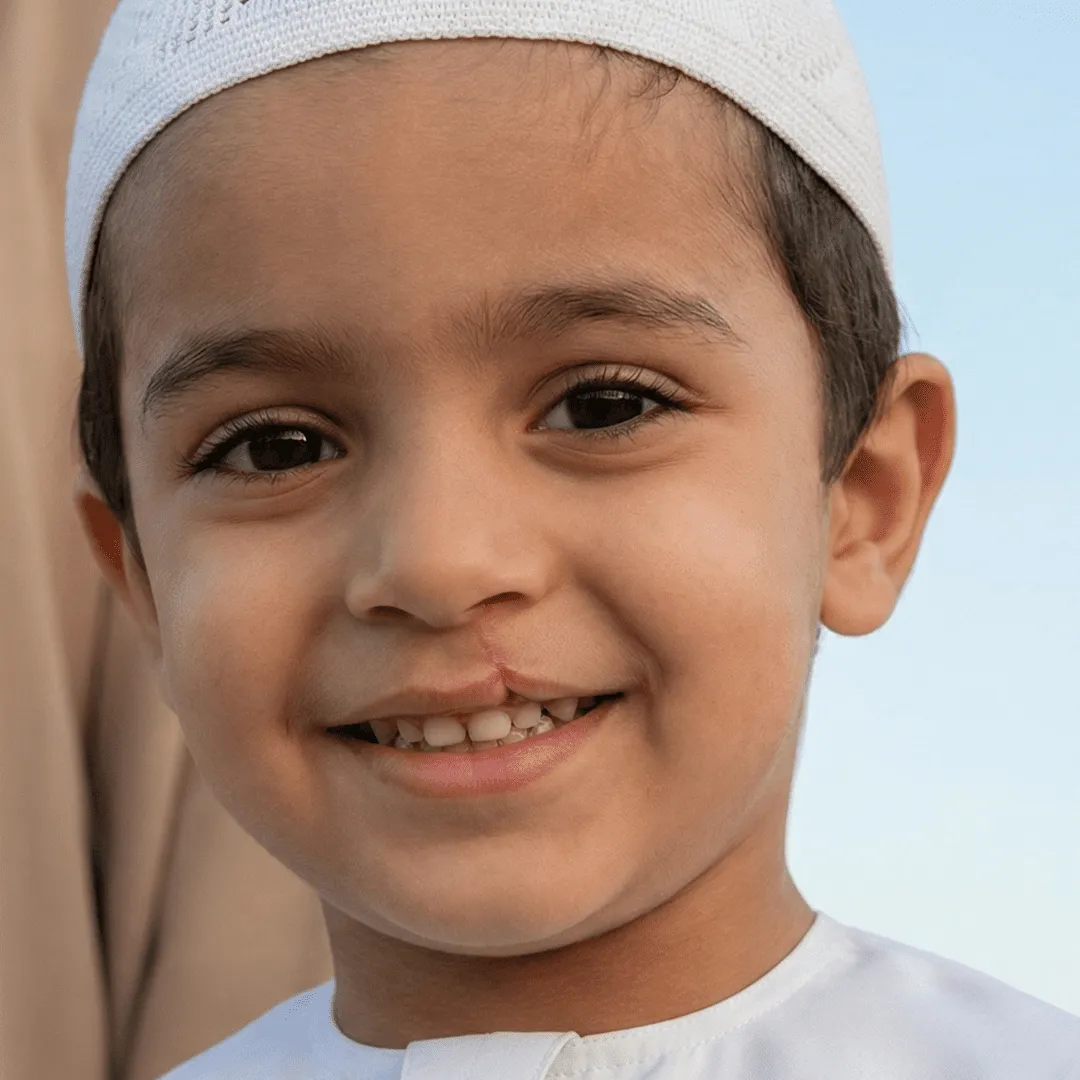
Being born with a facial difference presents unique physical and emotional challenges. Whether treating a child or an adult seeking late correction, Dr. Thomas Colson approaches congenital anomalies with a commitment to normalizing facial appearance and function.

We do not work in isolation. We provide comprehensive care within a multidisciplinary network that includes leading orthodontists and speech therapists in Abu Dhabi, ensuring every aspect of the condition—from the smile to speech clarity—is addressed.

1. Cleft Lip & Palate Revision (Secondary Surgery)

While primary repair is often done in infancy, many patients require “secondary” surgery in their teens or adulthood to refine the results. Dr. Colson specializes in:

  • Scar Revision: Using advanced Z-plasty techniques to realign the lip muscles and make the scar less visible.
  • Cleft Rhinoplasty: Correcting the characteristic flattened nasal tip and deviated septum associated with cleft lip to improve breathing and nasal symmetry.

Lip Symmetry: Adjusting the “Cupid’s bow” and lip volume to create a natural, balanced smile.

2. Hemifacial Microsomia Correction

Hemifacial Microsomia involves the underdevelopment of the tissues (bone, muscle, and fat) on one side of the face. Our goal is to restore symmetry and volume.

  • Structural Fat Grafting: For mild to moderate cases, Dr. Colson uses the patient’s own fat (Lipofilling) to build up the cheek, jawline, and chin on the affected side.
  • Implant Reconstruction: In cases where bone deficiency is significant, custom facial implants or bone grafts may be utilized to construct a stable skeletal foundation.

3. Vascular Malformations

Vascular anomalies (such as hemangiomas or vascular malformations) can distort facial features.

  • The Approach: Dr. Colson collaborates with vascular specialists to determine the best course of action, which may include laser therapy for surface discoloration or surgical excision for deeper, volume-distorting masses.

Frequently Asked Questions

Minor scar revisions can be done at any age. However, for Cleft Rhinoplasty (nose correction), it is strongly recommended to wait until facial growth is complete (typically age 16-17 for girls, 17-18 for boys) to ensure the results are permanent and stable.

Yes. A significant portion of our practice is “Adult Correction.” Many adults were born at a time when surgical techniques were less advanced. It is never too late to improve lip scars, nasal breathing, or facial symmetry.

In many cases, yes. Because these conditions are congenital (present at birth) and affect function (breathing, eating, speech), major insurance providers in the UAE often cover corrective surgeries. Our team can assist in providing the necessary medical coding for approval.

skin cancers

Skin Cancer Reconstruction: Safety Meets Aesthetics

The high UV index in the UAE necessitates constant vigilance regarding skin health. While the diagnosis of malignancies such as Basal Cell Carcinoma (BCC) and Squamous Cell Carcinoma (SCC) can be alarming, the treatment path is well-established and highly effective.

Dr. Thomas Colson specializes in the Reconstructive Phase of dermatologic oncology. Whether the cancer is removed by a dermatologist, a Mohs surgeon, or Dr. Colson himself, our goal remains the same: Oncological safety first, followed by an aesthetic closure that restores your natural appearance.

The Reconstructive Phase: Closing the Wound

Following the excision of a skin cancer, patients are left with a surgical defect (wound). Closing this defect requires specialized techniques, especially when located on sensitive areas like the nose, lips, eyelids, or ears, where a millimeter of distortion can change your facial expression.

We employ two primary methods to ensure the scar is as invisible as possible:

  1. Local Flaps (The Gold Standard)

Whenever possible, Dr. Colson utilizes a Local Flap.

  • The Technique: Healthy tissue is lifted from an area immediately adjacent to the wound and “advanced” or “rotated” to cover the defect.
  • The Advantage: Because the tissue comes from the same area, it provides a near-perfect match in skin color, texture, and thickness. The resulting scars are designed to hide within the natural boundary lines of the face (wrinkles or contours).
  1. Skin Grafts

For larger defects or areas where the skin is very tight (like the lower leg or certain parts of the nose), a Full-Thickness Skin Graft may be used.

  • The Technique: A piece of healthy skin is harvested from a hidden area (often behind the ear or near the collarbone) and transplanted to the wound site.
  • The Advantage: This allows for the closure of large wounds without distorting the surrounding features.

Precision in Critical Areas

Reconstruction is not just about closing a hole; it is about preserving function.

  • Eyelids: Ensuring the eye can close completely to prevent dryness.
  • Lips: Maintaining the lip seal for eating and speaking.
  • Nose: Preventing the collapse of the nostril rim to ensure open breathing.

Frequently Asked Questions

Mohs surgery is a precise method of removing skin cancer layer by layer (performed by a Mohs Dermatologist). Once the cancer is fully removed, a “defect” remains. Mohs Reconstruction is the plastic surgery performed immediately after to close this wound and restore the shape of the face.

Yes, all surgery leaves a scar. However, Dr. Colson specializes in “Scar Camouflage.” By placing incisions in natural shadow lines (like the fold of the nose or forehead wrinkles), the scar becomes difficult to see once fully healed.

Yes. Skin cancer treatment is a medical necessity, not cosmetic. Most health insurance providers in Abu Dhabi (Daman, Thiqa, etc.) cover both the excision of the cancer and the necessary reconstruction to restore function and appearance.