
Portrait of a woman wearing a white headscarf, photographed outdoors in Abu Dhabi. Illustrative image for the cosmetic medicine consultation.
Cosmetic Medicine — SKMC, Abu Dhabi

Non-surgical cosmetic medicine in Abu Dhabi

Cosmetic medicine covers non-surgical treatments performed in consultation. Dr Thomas Colson performs them at Sheikh Khalifa Medical City (SKMC), Abu Dhabi, applying the same anatomical assessment he uses in surgery.

Six treatments, assessed individually

Each indication is evaluated during consultation at SKMC. Dr Colson is double board certified by SOFCPRE and EBOPRAS and licensed by the Department of Health Abu Dhabi. Non-surgical treatment is often discussed alongside surgery: where a structural change is required, he will say so, and the relevant option is set out on the pages for facial aesthetic surgery or facial reconstruction.

Treatments

Botulinum toxin (Botox)
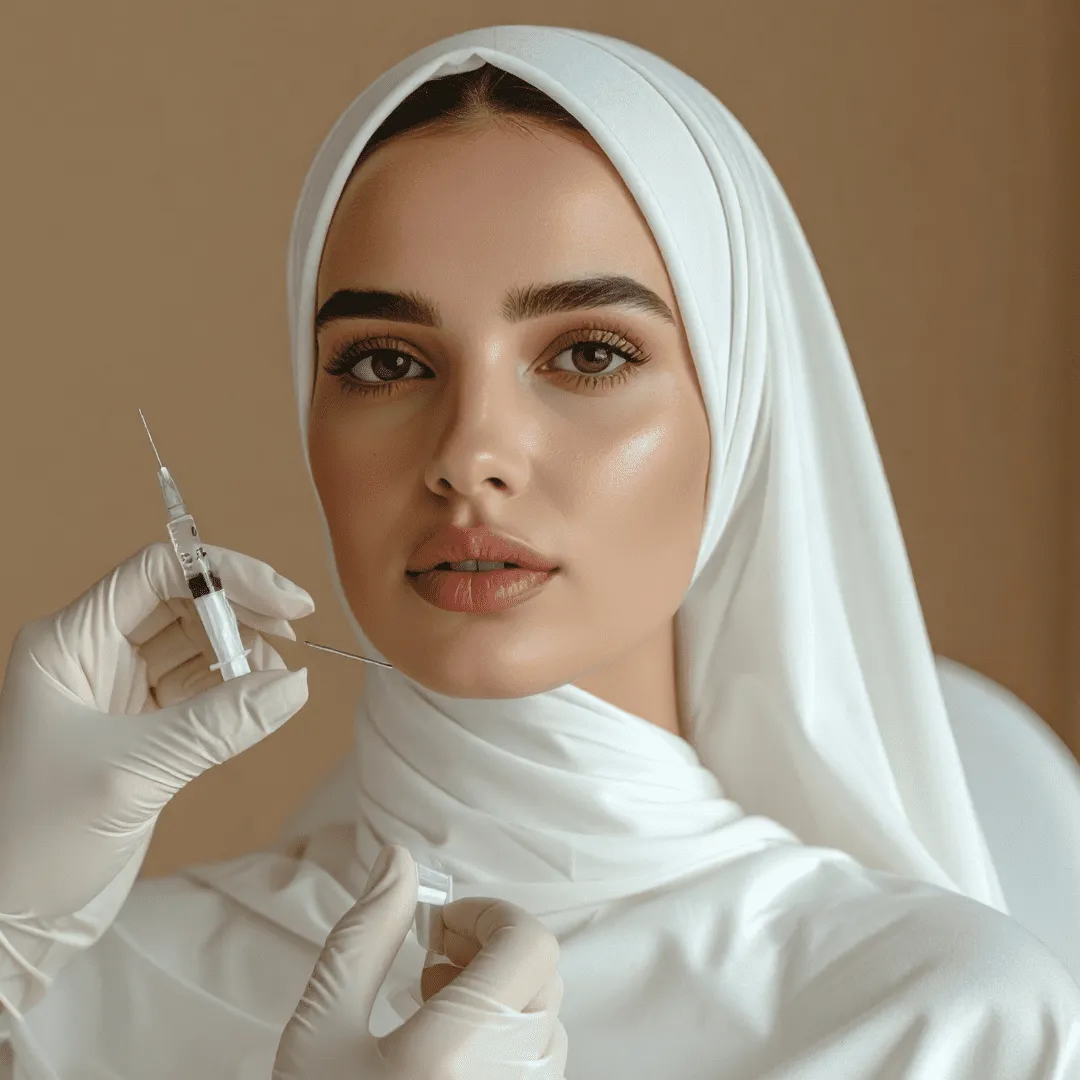
A gloved hand holds a fine syringe beside the face of a woman wearing a white headscarf. Illustrative image for botulinum toxin injection.
Illustrative photograph. Not a patient of the practice.

Neuromodulators such as Botox and Dysport relax a targeted muscle so the skin above it smooths. In the hands of a plastic surgeon they are also instruments of facial reshaping, not only a treatment for lines. Dr Colson works to preserve facial expression while softening the lines that movement creates.

On the upper face, treatment targets dynamic lines caused by repeated muscle movement. Dr Colson frequently uses a micro-dosing technique, known as baby Botox, which uses smaller quantities of product to preserve movement while limiting the formation of deeper lines.

On the lower face, the same molecule alters proportion. The masseter is the muscle used for chewing; when it is overdeveloped, a condition called masseter hypertrophy, it can produce a wide, square jawline. Injecting botulinum toxin relaxes the muscle, which reduces in volume over time and slims the lower face.

Botulinum toxin also has recognised medical applications. In hyperhidrosis, or excessive sweating, it blocks the nerve signals to the sweat glands.

Indications

  • Forehead lines
  • Frown lines of the glabella
  • Crow’s feet around the eyes
  • Masseter hypertrophy producing a wide, square jawline
  • Hyperhidrosis of the underarms or palms

Dermal fillers

Profile of a woman wearing a white headscarf, seated in a treatment chair. Illustrative image for dermal filler treatment.
Illustrative photograph. Not a patient of the practice.

Facial ageing is not only a matter of lines. It involves the loss of structural support in bone and fat, and a change in skin quality. Dr Colson approaches injectable treatment as a restoration of structure rather than simple filling.

Lifting the face without surgery requires rebuilding the deep foundation. High-density structural fillers such as Restylane Lyft or Juvederm Voluma are used to mimic bone structure. Restoring volume to the mid-face lifts the nasolabial folds; defining the chin and jawline improves the profile.

For mobile areas of the face, softer and more flexible fillers move naturally with expression. Lip treatment ranges from subtle hydration to defined volume, shaped so the lips remain soft and proportionate. Treatment of the tear troughs corrects hollowing under the eyes.

The fillers used contain lidocaine mixed into the gel, and Dr Colson uses blunt-tipped micro-cannulas for many areas, which reduces discomfort, bruising and the risk of vascular complications compared with sharp needles.

Indications

  • Loss of volume in the mid-face
  • Nasolabial folds
  • Chin projection and jawline definition
  • Lip shape and hydration
  • Hollowing of the tear troughs

Skin boosters

Portrait of a smiling woman wearing a white headscarf in a clinic interior. Illustrative image for skin booster treatment.
Illustrative photograph. Not a patient of the practice.

Skin boosters are not fillers and do not change the shape of the face. They use micro-droplets of stabilised hyaluronic acid which, unlike filler, is not cross-linked to create volume. The product disperses under the skin and attracts water.

Products such as Profhilo and Restylane Skinboosters deliver a high concentration of pure hyaluronic acid into the dermis, where it spreads rather than remaining in a single deposit. The result is an improvement in hydration, firmness and skin texture. The treatment acts as an internal moisturiser that lasts several months and softens fine lines.

Indications

  • Dehydrated or dull skin
  • Fine lines
  • Loss of firmness
  • Uneven skin texture

Mesotherapy

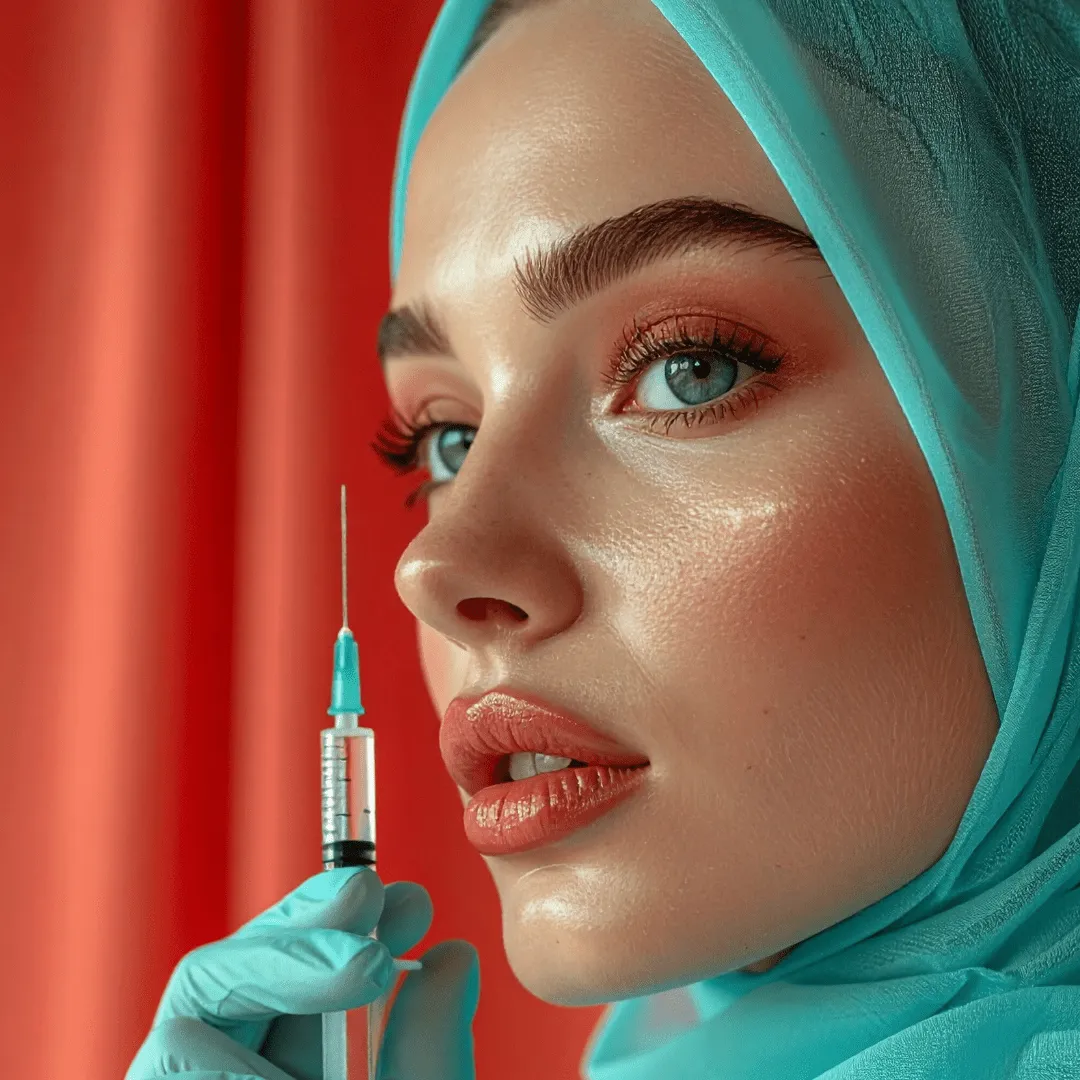
A gloved hand holds a syringe beside the face of a woman wearing a turquoise headscarf. Illustrative image for mesotherapy.
Illustrative photograph. Not a patient of the practice.

Mesotherapy delivers nutrients by micro-injection into the mesoderm, the middle layer of the skin, where blood vessels and collagen-producing fibroblasts are located. In the climate of Abu Dhabi, topical creams often do not penetrate deeply enough to address dehydration and dullness.

Dr Colson prepares a blend adapted to each patient’s skin. It typically combines vitamins A, C and E to address oxidative stress and pigmentation, with amino acids and hyaluronic acid. A topical anaesthetic cream is applied twenty minutes before the procedure, and ultra-fine needles or micro-injection devices are used.

Indications

  • Dull skin lacking radiance
  • Oxidative stress
  • Uneven pigmentation
  • Skin requiring nutritional support

LED biomodulation

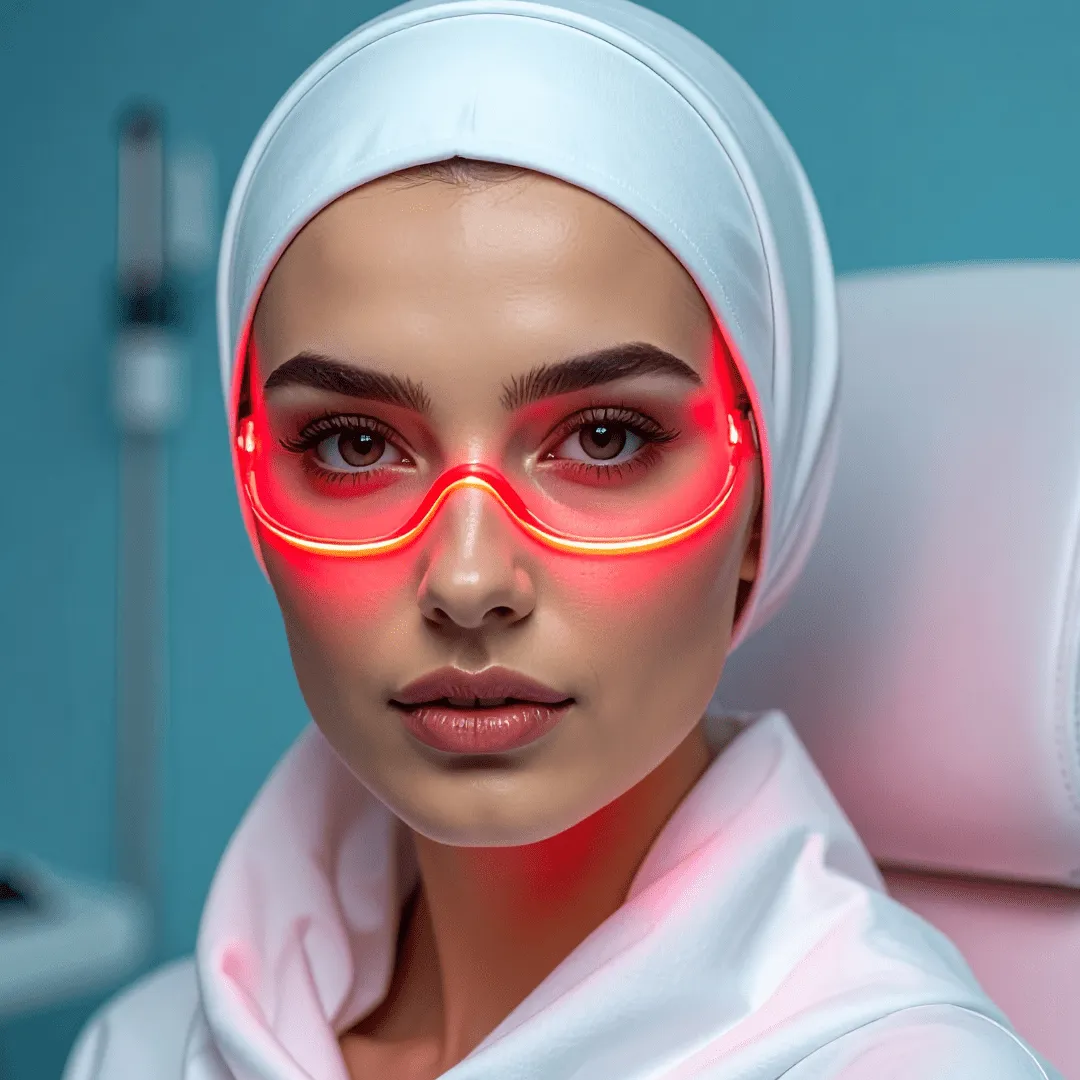
A woman wearing a surgical cap and protective goggles emitting red light during an LED session. Illustrative image for LED biomodulation.
Illustrative photograph. Not a patient of the practice.

LED biomodulation, also called low-level light therapy, uses specific wavelengths of light that interact with skin cells at a molecular level. It is non-thermal and UV-free, which makes it suitable for all skin types. Dr Colson uses medical-grade LED therapy both for skin quality and as an adjunct to surgery, to support recovery.

Blue light at 415 nm targets Cutibacterium acnes bacteria within the pores and causes their destruction, which reduces active lesions and inflammation without requiring antibiotics. Red light at 633 nm penetrates deeper into the dermis and stimulates the mitochondria, activating the fibroblasts that produce collagen and elastin. Near-infrared light at 830 nm travels deepest into the tissue.

Medical-grade devices emit a substantially higher power density than home devices, which allows the light to reach the depth required to trigger a cellular response.

Indications

  • Active acne
  • Fine lines and loss of skin density
  • Support of post-operative recovery
  • Scar management and deep tissue inflammation

Platelet-rich plasma (PRP)

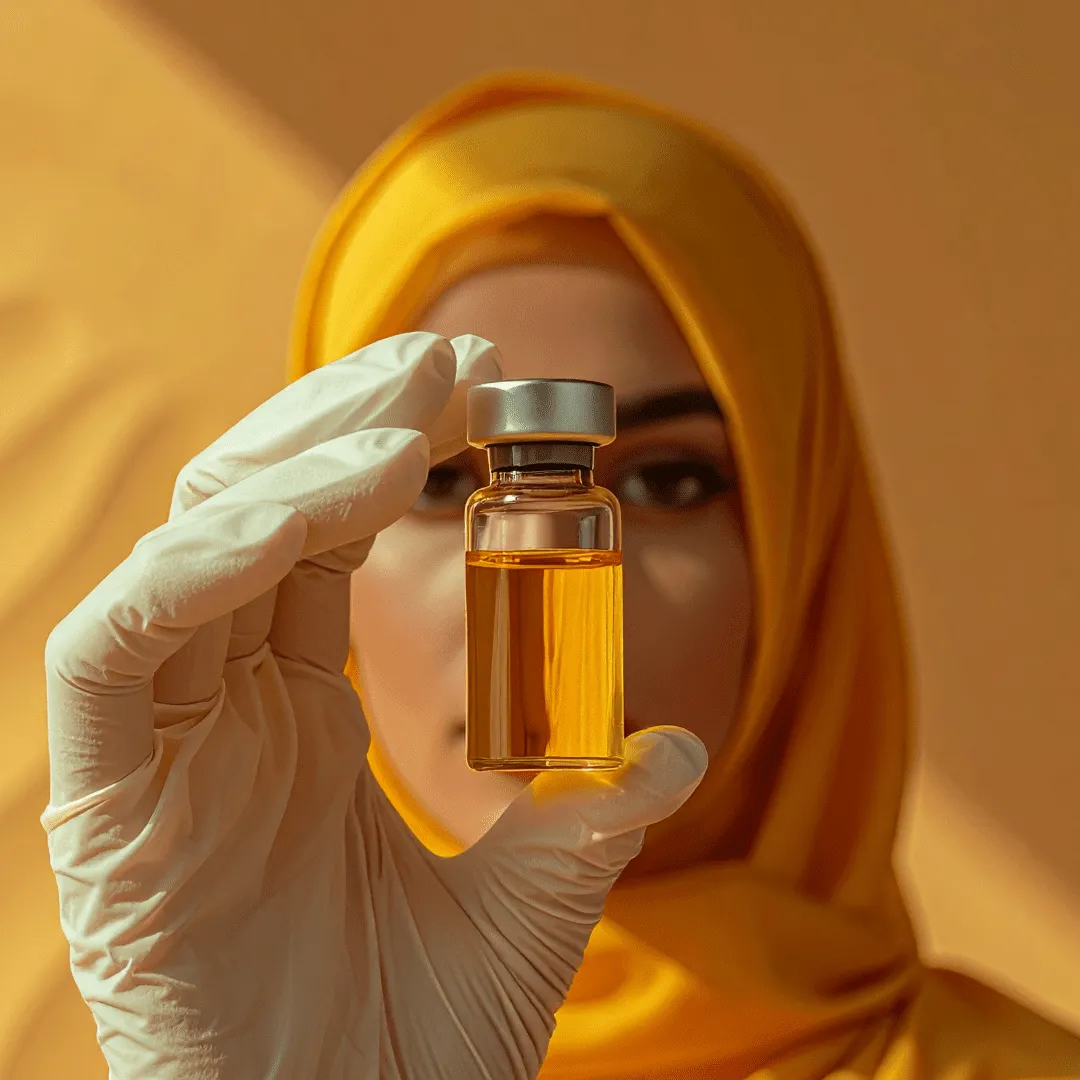
A gloved hand holds a vial of amber plasma in front of a woman wearing a yellow headscarf. Illustrative image for platelet-rich plasma treatment.
Illustrative photograph. Not a patient of the practice.

PRP uses the patient’s own blood. A small volume is drawn and spun in a centrifuge to isolate the plasma fraction, which is rich in platelets.

Injected into the scalp or the face, these platelets release growth factors that stimulate repair and increase local blood flow. PRP is a well-established treatment, and the indication is assessed individually during consultation at SKMC.

Indications

  • Thinning hair and early-stage hair loss
  • Facial skin quality

Frequently asked questions

What is the difference between Botox and Dysport?

Both are neuromodulators made from botulinum toxin type A and both work by relaxing muscles. Dysport tends to spread slightly more, which suits larger areas such as the forehead or the masseter muscles, while Botox is often preferred for precise, small areas. Dr Colson selects the product appropriate to each patient’s anatomy.

How long do dermal fillers last?

It depends on the product and the area treated. Structural fillers in the jaw or cheek generally last twelve to eighteen months. Lip fillers last six to nine months because the area is highly mobile. Bio-remodelling requires two initial sessions, with results lasting approximately six months. Individual results vary.

What is the difference between skin boosters and dermal fillers?

Fillers build structure, such as cheekbones or chin projection. Skin boosters hydrate the skin without changing the shape of the face. They improve the quality of the skin rather than facial proportions.

Is injection uncomfortable?

The fillers used contain lidocaine, a local anaesthetic, mixed into the gel. Dr Colson also uses blunt-tipped micro-cannulas for many areas, which reduces discomfort, bruising and the risk of vascular complications compared with sharp needles. For mesotherapy, a topical anaesthetic cream is applied twenty minutes beforehand and ultra-fine needles are used. Some discomfort during the injection remains normal.

Is there downtime after skin boosters?

Very little. Small papules may appear at the injection sites immediately after treatment. They resemble small insect bites and generally disappear within twelve to twenty-four hours as the product absorbs into the skin.

How many LED sessions are needed?

After surgery, one to two sessions per week during the first two weeks are typically recommended. For active acne, a course of six to eight sessions, twice weekly, is usually required.

Can the nose be reshaped without surgery?

Reshaping the nasal profile with filler is described on the dedicated rhinoplasty site, including what it can correct, what it cannot, and the situations where surgical rhinoplasty is the appropriate option instead.

Which standard applies to non-surgical cosmetic procedures in Abu Dhabi?

The Department of Health Abu Dhabi publishes the Non-Surgical Cosmetics Standard (DOH/ST/HCWS/HCPP-Non-SCP/V1/2024). It sets the requirements that apply to non-surgical cosmetic procedures in the emirate.

Consultation

Consultations and surgery are performed exclusively at SKMC, Abu Dhabi.

Booking line 80050 SEHA WhatsApp

Booking line80050 SEHA WhatsApp+971 2 410 2200

Educational disclaimer

The information provided on this website is for educational and informational purposes only. It is not intended as a substitute for professional medical advice, diagnosis, or treatment. Always seek the advice of a qualified surgeon or health provider with any questions you may have regarding a medical condition.